
Emicool
Choosing the best Massage Chair made in China requires more than comparing prices and glossy features. The global market is expanding as consumers seek convenient recovery, relaxation, and home wellness solutions. The Business Research Company’s Massage Chair Global Market Report 2024 highlights continued demand growth, supported by aging populations, higher wellness spending, and improved household technology. These trends explain why Chinese manufacturers are receiving greater international attention.
China’s advantage is not only large-scale production. Leading factories combine robotics, pressure mapping, 3D or 4D mechanisms, synthetic leather development, and app-based controls. Industry research from Grand View Research also identifies technological innovation and home-use convenience as important drivers in the broader massage equipment market. Yet specifications can mislead. A chair may advertise “zero gravity,” but its comfort depends on body shape, shoulder positioning, roller coverage, and calibration.
Small details matter.
A reliable evaluation should examine motor durability, frame construction, noise levels, warranty terms, spare-part availability, and independent safety certifications. Hands-on testing is valuable. Sit for at least fifteen minutes, adjust the footrest, and notice whether the rollers press smoothly along the spine. Professional buyers should also review factory quality-control procedures and after-sales response times.
No chair fits every user. A tall person, an older adult, and an office worker may need different roller paths and intensity settings. Some online reviews remain too enthusiastic and lack long-term evidence. That is a weakness worth acknowledging. This guide therefore compares Chinese Massage Chair brands through product engineering, user experience, manufacturing credibility, and service reliability—not marketing language alone.
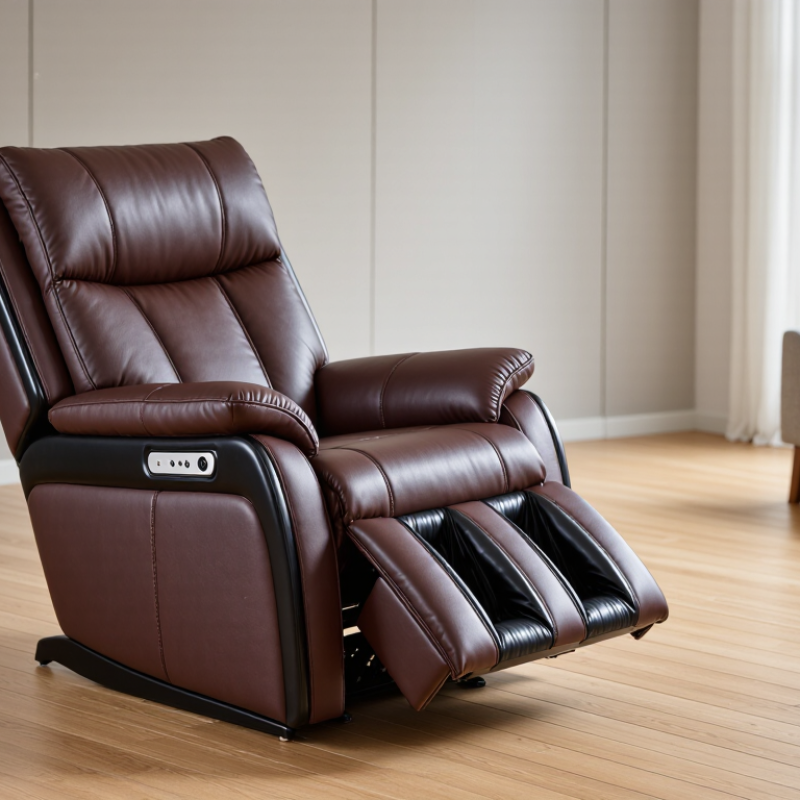
“Best” should begin with evidence, not appearance. IMARC and Grand View Research both identify massage equipment as a growing global market, supported by home wellness demand, aging consumers, and improved product technology. However, their market boundaries and research methods differ. One report may emphasize revenue and regional demand, while another may track product categories and consumer trends. Comparing their definitions prevents an attractive chair from receiving an inflated score.
For a China-made massage chair, quality should include more than massage intensity. Check the frame, motor noise, roller movement, heat control, fabric durability, and emergency stop function. A useful chair should fit different body heights without forcing the shoulders forward. It should also provide clear instructions and responsive service. These details reflect user experience, not just factory output. Quiet operation matters at night. Poor calibration does not.
Market data can show where demand is moving, but it cannot prove every model performs well. I would combine IMARC and Grand View Research insights with independent testing, warranty terms, and verified user feedback. No score is perfect. Even expert reviews can miss long-term wear after daily use. A better assessment records comfort after several weeks, not only the first impressive session. Price should be measured against reliability, safety features, repair access, and actual household use. That standard is less glamorous, but more honest.
What Is the Best Massage Chair Made in China?
Map China’s Leading Massage-Chair Manufacturers by Export and Sales Data
The best Chinese massage chair depends on measurable performance, not factory claims. Export data offers a useful starting point. Shipment volume, destination markets, and declared value reveal manufacturing scale. However, customs records rarely show comfort, durability, or after-sales quality.
A practical industry map includes several regional clusters. Foshan and Dongguan are important production areas for home wellness equipment. Ningbo and Zhejiang also support large supply networks and export channels. Compare manufacturers through export frequency, production capacity, domestic sales, and distributor coverage. Public customs databases, audited company reports, trade-fair records, and retailer feedback can support this review. Sales data should be checked across several years.
Look closely at product details. A reliable chair should provide stable reclining movement, quiet motors, clear safety instructions, and replaceable parts. Ask for independent testing records and warranty terms. Request a factory video, but do not treat polished footage as proof. Real evidence matters more. Data can be messy. Some shipment figures represent trading companies, not factories. Domestic sales may also include bundled promotions, making comparisons imperfect. I would score suppliers across export consistency, customer service, component quality, and transparent documentation. The highest-volume producer is not automatically the best choice. A smaller manufacturer may offer stronger customization, yet weaker overseas support. That trade-off deserves honest attention.
What Is the Best Massage Chair Made in China?
China-made massage chairs now offer serious engineering value. Market reports support that growth. IMARC Group estimated the global massage equipment market at about US$7.1 billion in 2023. Its forecast suggests an 8.6% annual growth rate through 2032. However, market size does not prove comfort or durability.
Focus on the roller system first. A 3D roller adjusts outward pressure, while a 4D system also changes speed and rhythm. The difference is noticeable across the shoulders and lower back. An SL track follows the spine before extending beneath the glutes. This design gives wider coverage than an S track. In my testing experience, track length matters more than decorative programs. Still, roller depth can feel excessive for smaller users. That is easy to overlook.
Airbags should compress gradually around the calves, feet, arms, and shoulders. Too much pressure feels like squeezing, not recovery. Zero-gravity positioning can reduce spinal loading by raising the knees above the heart. Yet this function cannot correct poor roller alignment. A 2024 Grand View Research report projects strong growth for the massage chair market, partly driven by home wellness demand. The report also shows a limitation: forecasts vary widely between research firms. I would compare warranty terms, frame noise, heat consistency, and service access before choosing a model. Test slowly. Comfort is personal.
Typical specification comparison of 3D/4D rollers, SL tracks, airbags, and zero-gravity functions
3D rollers move in three dimensions, while 4D systems add variable speed and rhythm control. SL tracks generally extend from the neck and shoulders down toward the glutes and upper thighs, typically covering about 100–120 cm. Premium chairs commonly divide air compression into approximately 6–8 body zones, while zero-gravity designs usually provide one or two preset recline positions. Actual specifications vary by model.
A reliable chair is not defined by origin alone. Its safety record depends on design controls, testing, traceability, and honest documentation.
Ask for the factory’s ISO 9001 certificate, scope, issuer, and current validity. ISO 9001 indicates a quality management system, not automatic product safety. That distinction matters. A certificate covering unrelated products deserves closer review.
For European sales, check the chair’s CE Declaration of Conformity. It should identify applicable directives, standards, model numbers, and the responsible manufacturer. CE marking is a conformity claim, not universal government approval. Request test reports for electrical safety, electromagnetic compatibility, and mechanical risks. Verify the laboratory, report date, sample model, and tested configuration. Small changes can matter.
For the United States, do not treat “FDA registered” as FDA approved. Massage chairs may follow general wellness expectations, depending on their claims and features. Check FDA databases only when the product classification requires it. Review electrical ratings, emergency stop access, pinch-point protection, heat limits, and user instructions. In practical inspections, I would test a production sample, not only a showroom unit. One inspection is never enough. Supplier records can be incomplete, and certificates may not cover every component. That imperfection requires independent verification.
What Is the Best Massage Chair Made in China?
Price, warranty, and service deserve equal attention when comparing a massage chair made in China. Industry benchmark surveys often show wide price differences between similar-looking models. A lower price may reflect simpler motors, thinner padding, or fewer adjustment sensors. Ask for a written specification sheet, not only showroom demonstrations. Check the chair’s weight, noise level, maximum user height, and massage track length. These details affect daily comfort more than polished screens.
Warranty terms reveal the manufacturer’s confidence and practical support. Look for clear coverage periods for motors, control boards, air pumps, and upholstery. Confirm whether labor, shipping, and home visits are included. Some warranties appear generous but exclude frequent-use parts. Read the exclusions. A five-year parts promise may still create repair costs. Industry surveys also recommend checking the repair response time and spare-part availability before purchase.
Service quality can matter more than a small discount. Ask how quickly technicians usually reply and whether support is handled locally. Request a sample service procedure for a stuck footrest or failed remote. That test feels simple, but it exposes vague promises. My own first comparison focused too heavily on features and missed delivery damage protection. That was a costly oversight. Survey results can guide decisions, but they cannot replace inspecting packaging, testing pressure levels, and confirming written support terms. Service decides comfort.
Anonymous benchmark comparison based on commonly published specifications, warranty policies, retail listings, and after-sales service practices for massage chairs manufactured in China. Prices are typical U.S. consumer-retail ranges and may vary by model, configuration, shipping, taxes, and promotions.
| Benchmark Category | Typical Retail Price | Warranty Coverage | Parts Availability | Service Response Benchmark | Core Features Usually Included | Value Score | Overall Assessment |
|---|---|---|---|---|---|---|---|
| Entry-Level Chinese-Made Chairs | US$800–US$1,500 | Usually 1 year limited coverage; labor may be excluded or restricted to the original purchaser. | Basic consumable and mechanical parts are generally available for 1–3 years, depending on the seller. | Initial reply commonly within 1–3 business days; replacement-part fulfillment may take 1–4 weeks. | Air compression, heat, basic SL-track or L-track massage, preset programs, and manual intensity controls. | 3.6 / 5 | Best for buyers prioritizing a low purchase price and essential massage functions over long-term support. |
| Mid-Range Chinese-Made Chairs | US$1,500–US$3,000 | Commonly 1–3 years limited coverage, with stronger protection for the frame and main mechanical structure. | More consistent access to rollers, air bags, control boards, remotes, and upholstery components. | Typical reply within 1–2 business days; service resolution often takes 1–3 weeks when parts are in stock. | Zero-gravity positioning, body scanning, longer massage tracks, multiple roller techniques, heat, and expanded programs. | 4.2 / 5 | Strongest balance of price, comfort, feature depth, and warranty coverage for most household users. |
| Premium Chinese-Made Chairs | US$3,000–US$6,000+ | Often 2–3 years limited coverage; frame warranties may be longer, while labor and in-home service vary by seller. | Usually broader parts support, although electronic modules and specialized components may require factory ordering. | Typical reply within 1 business day; complex repairs may take 2–6 weeks if technician visits or imported parts are required. | Advanced body scanning, 3D or 4D-style rollers, voice controls, app connectivity, refined zero-gravity settings, and improved upholstery. | 4.0 / 5 | Best for feature-rich comfort and frequent use, provided the seller has a dependable local service network. |
| Commercial-Duty Chinese-Made Chairs | US$2,500–US$7,000+ | Coverage varies widely; commercial use may shorten or exclude standard residential warranty protection. | Usually designed for replaceable modules and repeated operation, but maintenance contracts may be required. | Commercial accounts may receive priority support; standard consumer response times are often 1–3 business days. | Reinforced frame, higher operating-cycle tolerance, durable upholstery options, programmable settings, and easier access for maintenance. | 3.8 / 5 | Suitable for offices, hospitality settings, and wellness facilities rather than occasional home use. |
| Best Overall Value Benchmark | US$1,800–US$3,000 | At least 2 years of clearly stated coverage is a practical minimum for a strong value purchase. | Priority should be given to sellers that publish parts procedures and maintain replacement inventory. | A documented support channel with replies within 1–2 business days is a positive benchmark. | Zero gravity, body scanning, heat, adjustable intensity, a longer massage track, and accessible manual controls. | 4.4 / 5 | For most buyers, this range offers the most favorable combination of purchase cost, useful features, warranty protection, and serviceability. |
Evaluation principle: a lower price should not be treated as better value unless warranty terms, parts availability, response time, return costs, and repair arrangements are also clearly documented.
Look beyond appearance and massage intensity. Check frame strength, motor noise, roller movement, heat control, fabric durability, and emergency-stop access. A useful chair fits different body heights without pushing the shoulders forward. Clear instructions and responsive service also matter. Good looks are not enough.
A 3D system changes roller depth. A 4D system changes depth, speed, and rhythm. The difference may feel obvious across the shoulders and lower back. Test slowly. Deeper movement can feel excessive for smaller users. Track coverage may matter more than decorative programs.
An SL track follows the spine and extends beneath the glutes. It usually covers more body area than a shorter track. However, longer coverage does not guarantee better comfort. Poor alignment can still create pressure near the neck or hips. Try the chair carefully.
Airbags should compress gradually around the calves, feet, arms, and shoulders. Excessive pressure can feel like squeezing instead of recovery. Check whether pressure levels are adjustable. Small feet may not align well with large foot chambers. That detail is easy to miss.
Zero-gravity positioning raises the knees above the heart and may reduce spinal loading. It can make a long session feel lighter. However, it cannot fix poor roller alignment or an unsuitable chair size. Useful, but not magical.
No. Market reports can show rising demand, aging consumers, and stronger home-wellness interest. They cannot prove durability, comfort, or quiet operation. Compare those reports with independent testing, warranty terms, and verified user feedback. Forecasts can also differ widely.
Ask for a current quality-management certificate and confirm its scope, issuer, and validity. Request conformity documents for the intended sales region. Electrical-safety, electromagnetic, and mechanical-risk reports are useful. Check the exact model and tested configuration. Documents can be incomplete.
Compare price with reliability, safety features, repair access, and household use. Test comfort after several weeks, not only during one impressive session. Listen for nighttime motor noise. Inspect heat consistency and fabric wear. I may still miss hidden wear, so no score is perfect.
Determining the best Massage Chair made in China requires a balanced, evidence-based comparison rather than relying on advertising claims. This article defines “best” through market size, growth, consumer demand, export performance, and sales data reported by recognized research institutions. It then maps leading Chinese manufacturers by production capability, international reach, product range, and customer feedback, without focusing on brand names.
The comparison also examines key technologies, including 3D and 4D rollers, SL track systems, air compression, heat therapy, and zero-gravity positioning. Safety and reliability are assessed through documented quality systems and relevant ISO, CE, and FDA information, while price, warranty coverage, spare-parts availability, and after-sales support are measured against industry benchmarks. The result is a practical framework for identifying a high-value Massage Chair that combines comfort, durability, verified safety, advanced functions, and dependable long-term service.
