
Emicool Emicool

How to Choose a Head Massage Machine in 2026?

Time:2026-11-22 Author:Mason
0%

Choosing a Head Massage machine in 2026 is less about chasing the strongest motor and more about finding comfortable, controllable contact. A device should feel steady on your scalp, not like a hard plastic wheel pressing one tender spot. Check its fit, weight, grip, cleaning instructions, and whether the controls are easy to reach. Small details matter. A slippery handle can turn a relaxing routine into an awkward one.

Scalp-massage researcher Dr. Tokuji Koyama and colleagues published the study titled “Standardized scalp massage results in increased hair thickness by inducing stretching forces to dermal papilla cells in the subcutaneous tissue.” That finding concerns a specific study, not a promise that any home machine will grow hair. Keep that distinction in mind. For everyday use, look for adjustable intensity, gentle contact points, and clear safety guidance; begin with a low setting and stop if you feel pain, numbness, or irritation. A machine cannot replace medical advice for persistent scalp symptoms. Nor is a higher price proof of better results. Some choices are personal, and the best fit may take a little trial and reflection. This guide will compare features, comfort, maintenance, and practical limits, so you can choose a Head Massage machine with realistic expectations.
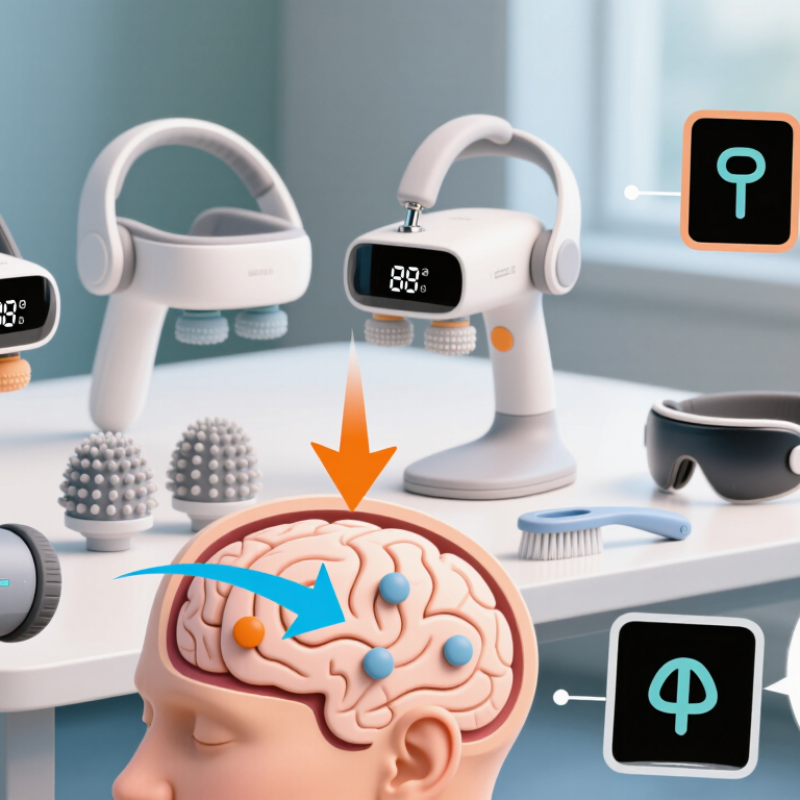
How to Choose a Head Massage Machine in 2026?

Identify Your Scalp Massage Needs and Intended Use

Before choosing a head massage machine, decide when and why you will use it. Is your goal a brief relaxation break, gentle stimulation while shampooing, or a hands-free evening routine? McKinsey’s 2024 wellness research found that 82% of U.S. consumers consider wellness a top or important priority. That broad interest does not mean every device suits every scalp. Start with your routine.

For a shower, check that the device is designed for wet use and has a head that is easy to clean. For use on dry hair, consider grip, weight, noise, and whether its massage points snag your hair. Adjustable speed matters if your scalp is sensitive. Less pressure is often wiser. It is easy to assume stronger vibration means a better massage, but comfort and consistent use are more practical measures.

Think about who will use it, too. A shared device needs removable, washable contact surfaces; a personal one should still be cleaned as directed. If you have tenderness, irritation, or a scalp condition, avoid pressing over sore areas and seek professional advice if symptoms persist. A massage machine is for comfort, not diagnosis or treatment. Compare the routine you actually want with the device’s controls, cleaning steps, and return policy before buying.

Compare Head Massage Machine Types and Massage Methods

How to Choose a Head Massage Machine in 2026?

Head massage machines use different designs and techniques, so start with how you want to wear or hold one. Wearable models leave your hands free and may use rotating nodes or gentle air pressure around the temples. Handheld devices offer more control over specific spots, but holding one can become tiring. Scalp-comb styles are lightweight and easy to rinse, though their contact may feel less like kneading. Fit matters. A loose device may shift, while a tight one can feel unpleasant after a few minutes.

Massage methods also feel distinct. Kneading nodes create a slow, fingertip-like pressure across the scalp. Vibration feels quicker and lighter; some people enjoy it, while others find the buzz distracting. Air compression tends to focus on the temples, not the whole scalp. Try the lowest setting first. A strong sensation is not automatically a better massage.

Check whether the contact parts can be cleaned, whether hair gets caught, and how loud the motor sounds in a quiet room. If possible, test the device over your usual hairstyle. This detail is easy to overlook. There is no universally best method, and product descriptions can make subtle differences sound dramatic. Stop if you feel pain, dizziness, or skin irritation, and seek professional advice if you have a scalp condition or sensitivity.

Evaluate Fit, Controls, Power, and Comfort Features

How to Choose a Head Massage Machine in 2026?

Fit, controls, power, and comfort matter more than a crowded feature list. McKinsey’s 2024 Future of Wellness survey found that 82% of US consumers consider wellness a top or important priority. The Global Wellness Institute estimated the global wellness economy at $6.3 trillion in 2023. These figures describe broad interest, not proof that a head massager improves health. Try the fit carefully.

Check whether the band adjusts without squeezing your temples or pressing on your ears. If possible, test it with your usual hairstyle; thick hair can change how the pads sit. Controls should be easy to find by touch, especially with your eyes closed. Simple buttons beat a confusing menu. Look for clear intensity settings and a timer, so sessions do not run on by accident.

Power is about usable comfort, not the strongest sensation. Start low, then increase only if it feels pleasant. A heavy unit may feel tiring after several minutes, while a loose one can shift when you move. Check the weight, padding, noise, and charging method before buying. Stop if you feel pain, numbness, or dizziness. One detail is easy to miss: product descriptions rarely tell you how a device feels on your own head. That part takes a real fit check.

How to Choose a Head Massage Machine in 2026? — Evaluate Fit, Controls, Power, and Comfort Features

Evaluation Dimension What to Check Practical Buying Guide Why It Matters Before You Buy
Fit and head coverage Adjustable straps or arms, contact-point placement, and compatibility with your head shape and hairstyle. Look for a fit that feels secure without squeezing. If possible, check the product’s stated size range and whether the contact points can be repositioned. A poor fit can cause pressure in one area or leave parts of the scalp untouched. Check measurements, return terms, and whether the device can be adjusted while worn.
Massage style Choose between scalp kneading, air-pressure compression, vibration, or a handheld massager. Kneading devices move contact points across the scalp; air-pressure designs inflate and release cushions; vibration models provide oscillating stimulation. Handheld devices offer more control over placement. Different mechanisms feel distinct, so the most suitable type depends on personal preference and intended use. Read how the device makes contact with the scalp and whether its massage parts are removable for cleaning.
Controls and settings Button accessibility, number of intensity levels, mode selection, and ease of stopping the device. Simple, clearly labeled controls are easier to operate during use. Multiple intensity levels allow gradual adjustment; more modes are useful only if they are easy to understand. Accessible controls help users adjust the experience comfortably and stop operation promptly. Check whether controls can be reached while wearing the device and whether it has a clear power-off function.
Power and charging Battery type, charging method, stated operating time, charging time, and whether corded use is possible. Compare the manufacturer’s stated runtime with your expected session frequency. Runtime varies by device, settings, battery condition, and use. Power details affect convenience, portability, and how often the device needs recharging. Confirm the charger or cable included, charging requirements, and whether the device can operate while charging.
Comfort and pressure Contact-point material, padding, weight, noise, and whether pressure can be adjusted. Choose a design that feels comfortable at its lowest setting and does not create sharp, localized pressure. A lighter design may be easier to wear for a session. Comfort affects whether the device is practical to use regularly. Look for user guidance on session length and check whether the materials touching the scalp can be cleaned.
Heat and extra features Optional warming function, timers, automatic shutoff, and other add-ons. Treat heat as an optional feature, not a requirement. A timer or automatic shutoff can help limit a session without needing to monitor the device continuously. Extra functions may improve convenience, but they can add complexity and are not necessary for everyone. Check the manual for heat settings, safety instructions, and any restrictions on use.
Cleaning and durability Removable or wipe-clean parts, material care instructions, warranty coverage, and replacement-part availability. Prefer a design with clear cleaning instructions. Do not assume a device is waterproof or suitable for use in a shower unless its documentation specifically says so. Appropriate care supports hygiene and helps prevent damage to the device. Review the care instructions, warranty exclusions, and the seller’s process for service or returns.
Safe and appropriate use Warnings, recommended session limits, and guidance for sensitive skin or medical conditions. Use the device only as directed. Stop if use causes pain, irritation, dizziness, or unusual discomfort. Massage devices are not a substitute for medical assessment or treatment. Consult a healthcare professional if you have a scalp condition, recent head injury, or a health concern that could affect safe use.

Note: Features and specifications vary by model. Treat listed guidance as a comparison checklist, and confirm exact fit, runtime, care instructions, and safety information in the product documentation.

Check Safety Standards, Materials, and Cleaning Requirements

When choosing a head massage machine in 2026, inspect the safety label and user manual before comparing features. Look for certification to a recognized electrical-appliance standard, such as IEC 60335-1 and the applicable massage-appliance requirements in IEC 60335-2-32. A certification mark should be traceable to the testing organization; a printed logo alone proves little. Check the cord, charging port, and housing for cracks or loose seams. Small details matter.

Materials touch warm, sometimes sweaty skin. Prefer smooth, nonporous contact surfaces that do not trap hair or oils, and check whether the manual identifies skin-contact materials or lists sensitivities. Avoid devices with peeling coatings, sharp edges, or foam pads that cannot be removed or wiped. Check the seams. A removable cover is useful, but only if its care instructions are clear.

Cleaning claims deserve scrutiny. CDC reports that roughly 1 in 31 U.S. hospital patients has a healthcare-associated infection on a given day; this is not a home massager risk estimate, but it underscores why shared-contact surfaces need routine cleaning. Follow the device’s instructions, unplug it first, and never immerse motorized parts unless the manual explicitly permits it. Not proof. I would still check whether replacement pads are available and whether the cleaning steps fit daily use.

How to Choose a Head Massage Machine in 2026: Check Water-Protection Ratings

IPX digits identify water-protection test categories under IEC 60529; they are classification codes, not a linear performance score. IPX0 indicates no declared water protection, while higher codes specify different tests, from dripping water to water jets or immersion. IPX9 covers high-pressure, high-temperature water jets. Check the device’s declared rating and care instructions before cleaning: water resistance does not automatically mean a machine is washable or safe to immerse. Also look for smooth, nonporous contact surfaces that can be cleaned as directed.

Compare Price, Warranty, and Long-Term Maintenance Costs

How to Choose a Head Massage Machine in 2026?

Compare Price, Warranty, and Long-Term Maintenance Costs

A low sticker price can hide expensive upkeep. Compare the full cost over two or three years, not just the checkout total. Check whether washable contact pads, replaceable liners, or charging cables are sold separately. If replacement parts are hard to find, a modest repair could leave the machine unused in a drawer. Small details matter.

Read the warranty before comparing coverage periods. Look for clear terms on the motor, battery, controls, and wear parts, since these may be treated differently. Note who pays shipping and whether proof of purchase is required. A longer warranty is useful only when the repair process is practical. Keep the receipt and warranty details together.

For maintenance, ask how the device should be cleaned and how often parts need replacement. A removable liner is easier to wipe after use than a fixed, textured surface with narrow seams. Check battery replacement options, too; rechargeable batteries may lose capacity over time. That adds up. I would not assume the cheapest model is the worst value, though. Service access and replacement-part prices can change that calculation, and manufacturers do not always make those costs obvious.

FAQS

How should I choose a head massage machine for my routine?

Decide whether you want a short relaxation break, shower use, or a hands-free evening routine. Choose controls and cleaning steps you will actually use.

What should I check before using one in the shower?

Confirm that the device is designed for wet use and has an easy-to-clean head. Never immerse motorized parts unless the manual permits it.

What features matter for dry-hair use?

Check the grip, weight, noise, and massage points for snagging. Adjustable speed can help if your scalp feels sensitive.

Does stronger vibration mean a better massage?

Not necessarily. Gentle pressure and comfortable, consistent use may matter more. Stronger is not always better.

What should I do if my scalp is sore or irritated?

Avoid pressing on sore areas. A massage machine is for comfort, not diagnosis or treatment; seek professional advice if symptoms persist.

What safety details should I inspect?

Read the safety label and manual. Look for traceable certification to a recognized electrical-appliance standard, and check for cracks or loose seams.

Which contact materials are easier to maintain?

Smooth, nonporous surfaces are less likely to trap hair and oils. Avoid peeling coatings, sharp edges, and pads that cannot be cleaned.

How should I clean a shared device?

Follow the cleaning instructions and unplug it first. Removable, washable contact surfaces can help. Small details matter.

What should I consider before buying?

Compare the routine, controls, cleaning steps, and return policy. I might still overlook a detail, so I would check replacement-pad availability too.

Conclusion

Choosing a Head Massage machine in 2026 starts with how and where you plan to use it. Consider whether you want gentle relaxation, a focused scalp massage, or a device for regular use at home or while traveling. Compare available designs and massage methods, such as rotating nodes or gentle vibration, and choose an option that feels comfortable rather than overly intense.

Before buying, check that the machine fits securely and is easy to operate, with practical controls, suitable power options, and comfortable materials. Look for clear safety guidance, skin-friendly construction, and parts that are simple to clean and maintain. Finally, compare the purchase price with the warranty, replacement-part availability, and likely upkeep costs. A well-chosen device should suit your routine, feel comfortable during use, and remain practical over time.

Mason

Mason

Mason is a seasoned marketing professional with a deep expertise in the company's offerings and a passion for driving brand awareness. With a strong background in digital marketing strategies, he has an innate ability to connect with diverse audiences and effectively communicate product benefits.......