
Emicool
Choosing the right Knee Massager begins with understanding the problem behind the discomfort. The World Health Organization’s 2023 osteoarthritis fact sheet reports that 528 million people lived with osteoarthritis in 2019. The knee remains one of its most commonly affected joints. This figure shows the scale of the need, but it does not prove that every person needs the same device.
A practical choice should consider heat control, massage intensity, fit, battery safety, and cleaning design. The American Academy of Orthopaedic Surgeons recommends individualized care for knee osteoarthritis, including exercise and other evidence-based treatments. A Knee Massager may support temporary comfort, relaxation, or recovery after activity. It should not replace diagnosis or professional treatment. That distinction matters.
Look closely at the details. Does the wrap sit around your kneecap without pressing sharply? Can you adjust the heat while sitting at a desk? Is the control panel clear when your hands feel stiff? Small features often decide whether a product stays useful. The best Knee Massager is not necessarily the strongest or most expensive model. Comfort may matter more than dramatic vibration.
Evidence for consumer massage devices remains uneven. Some claims sound impressive, yet independent clinical research is still limited. That is worth admitting. People with swelling, numbness, recent injury, circulation problems, or unexplained pain should seek medical advice before use. A thoughtful comparison should balance manufacturer specifications, professional guidance, warranty terms, and real user experience. The goal is simple: find reasonable support without confusing convenience with medical care.
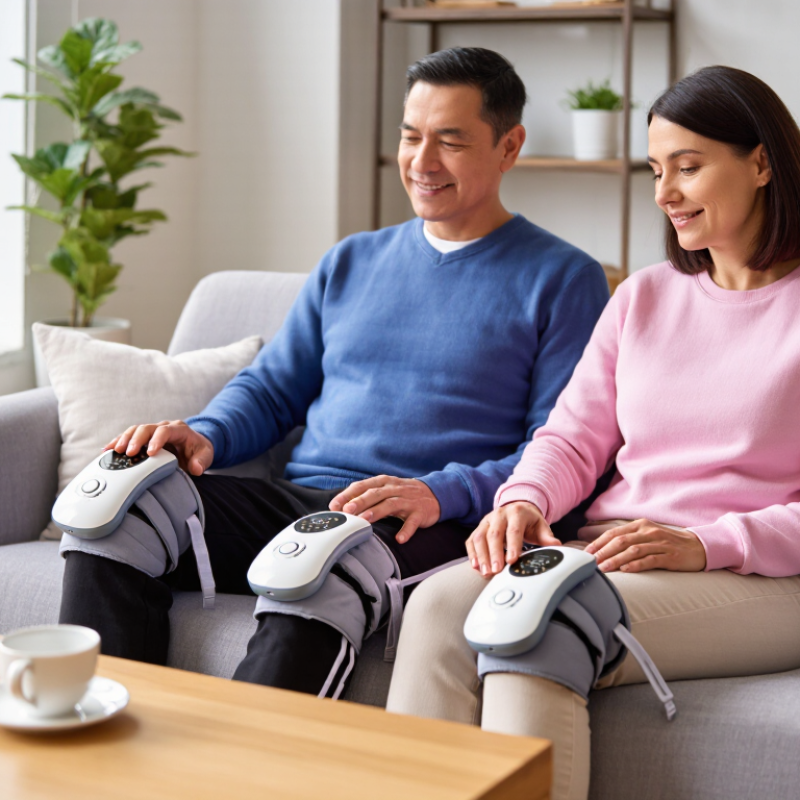
WHO reports that 528 million people live with osteoarthritis worldwide. This number changes how we should view knee discomfort: it is common, but never trivial.
Osteoarthritis can cause pain, stiffness, swelling, and reduced movement. A knee massager may support short-term comfort, especially after walking or prolonged sitting. It cannot rebuild damaged cartilage. That distinction matters.
Choose the device around your goal, not its most dramatic feature. For gentle warmth, select adjustable heat and clear temperature control. For stiffness, consider mild compression or vibration with several intensity levels.
People with sensitive skin, reduced sensation, circulation problems, or recent surgery should seek medical advice first. Stop if the knee becomes hotter, more swollen, numb, or sharply painful.
In practice, ten comfortable minutes may help more than a powerful session. I sometimes expect stronger pressure to work better. It often does not.
Tips: Check the fit while seated, keeping the knee in a natural position. Start with the lowest setting. Record pain before and after use for one week. If walking becomes harder, arrange an assessment with a qualified clinician. A massager should complement exercise, weight management, and prescribed care, not replace them. Evidence for many consumer devices remains limited, so judge results carefully.
The CDC reports that arthritis affects about one in four U.S. adults. That figure changes how we should view knee comfort. Persistent pain is not merely an inconvenience. It may reflect osteoarthritis, rheumatoid arthritis, an old injury, or another condition requiring assessment. A massager can ease stiffness for some people, but it cannot identify the cause or repair damaged joints.
Start with risk, not features. Avoid massage over a hot, red, severely swollen knee, an open wound, or unexplained bruising. Do not use one after a sudden injury without medical guidance. Calf swelling, chest pain, or unusual shortness of breath needs urgent medical attention, not a device. People with reduced sensation, poor circulation, diabetes, or inflammatory arthritis should ask a qualified clinician before using heat or compression. This is where many buying guides become too casual.
For routine stiffness, choose adjustable pressure, gentle movement, and a controllable heat setting. A timer can prevent accidental overuse. Test the lowest setting for five to ten minutes, then check your skin and symptoms. Stop if pain increases, numbness appears, or swelling worsens. I would not assume stronger pressure means better relief. Sometimes a warm, quiet session helps more than an aggressive massage. Keep a simple note of pain, stiffness, and swelling after each use. It may reveal that the device helps—or that the knee needs professional evaluation instead.
Knee discomfort affects movement, sleep, and ordinary tasks. The World Health Organization reports that about 1.71 billion people live with musculoskeletal conditions worldwide. A knee massager may ease symptoms, but it cannot identify their cause. Compare heat, compression, vibration, and adjustability carefully.
Heat can relax stiff muscles and improve comfort before gentle movement. The American College of Rheumatology conditionally recommends thermal interventions for some knee osteoarthritis symptoms. Compression may provide support and reduce the feeling of heaviness. However, pressure should never cause numbness, cold toes, or skin discoloration. Vibration feels pleasant for many users, yet research remains less consistent than evidence for basic thermal comfort. Treat vibration as an optional feature, not a guaranteed treatment. Adjustability matters most. Straps, pressure levels, and opening size should fit your knee without slipping.
Tips: Test the lowest heat and pressure setting first. Keep sessions short. Stop if pain increases.
Check the controls while seated. Can you change settings without bending deeply? That small detail matters after exercise or during flare-ups. In my experience, fixed designs often feel awkward because knees differ in swelling and shape. I would also question impressive “deep relief” claims without clinical evidence. People with circulation problems, reduced sensation, recent injuries, or unexplained swelling should seek medical advice before using heat or compression. A practical choice is usually the device offering precise adjustment, clear instructions, and honest safety limits.
Choosing a knee massager should begin with its safety controls, not its number of massage modes. During a home trial, I noticed how quickly pleasant warmth could become uncomfortable when concentration drifted. A reliable device should let you set the temperature gently and check it against your skin. Heat should feel soothing, never sharp, burning, or numb. Stop immediately if redness, swelling, dizziness, or unusual pain appears. People with reduced sensation, circulation problems, recent surgery, or unexplained knee pain should seek medical advice before using heat or compression.
Pressure control matters just as much. Look for several levels, a clearly marked release button, and a fit that does not pinch behind the knee. Start with the lowest setting for a short session. Your knee should not feel trapped afterward. I once assumed stronger pressure meant better relief. That assumption was wrong. Excessive pressure can irritate tender tissue and disguise worsening symptoms. Clinical safety practice favors gradual use, skin checks, and stopping when discomfort increases.
An automatic timer is essential, especially when reading or resting. Choose a model that shuts off without requiring a phone or complicated menu. Fifteen minutes may be enough for an initial session. Follow the instructions, but treat them as a starting point, not personal medical advice. Inspect your skin after removal, record the setting that felt comfortable, and avoid sleeping while the massager runs. Small controls matter. They prevent careless overuse.
Safety checklist: prioritize adjustable temperature, pressure, and automatic-timer controls.
The chart uses a practical 0–5 verification scale: 5 means the control is clearly adjustable and easy to use, while 0 means the feature is absent. Before use, select a comfortable temperature and pressure, keep sessions within the recommended time, and stop immediately if discomfort or excessive heat occurs.
A convincing knee massager should have evidence beyond glowing customer comments. Look for clinical references, clearly explained testing, and realistic comfort claims. “Relieves pain” can mean temporary soothing, not medical treatment. I learned this after trusting impressive wording that offered no measurable details. Check whether studies involve similar users, treatment times, and conditions. Small samples deserve caution.
FDA status needs careful reading. FDA clearance, registration, and approval are not interchangeable terms. Confirm the device through official FDA resources when applicable. A CE mark indicates conformity with European safety requirements, but it is not a guarantee of therapeutic results. Ask for the declaration of conformity, responsible manufacturer details, and safety instructions. Missing documents are a warning.
Tips: Measure your knee before purchasing. Check the adjustable strap range and contact support with your exact measurements. The massager should feel secure, not tight. Test whether controls remain reachable while seated. Review the warranty length, return period, repair process, and exclusions. A short warranty may reveal limited confidence, though that is not always true. Keep the receipt and record the model number. If swelling, numbness, unusual heat, or worsening pain appears, stop using it and seek qualified medical advice. Fit matters most.
Arthritis affects about one in four U.S. adults. Persistent knee pain deserves attention.
No. It may ease stiffness, but it cannot diagnose arthritis or repair damaged tissue.
Avoid it over a hot, red, severely swollen knee. Do not use it over wounds or unexplained bruising.
Choose adjustable pressure, gentle movement, controllable heat, and an automatic timer.
Not necessarily. Strong pressure may irritate tender tissue or hide worsening symptoms.
Begin with the lowest heat and pressure settings for five to ten minutes.
A timer helps prevent accidental overuse while reading or resting.
People with reduced sensation, poor circulation, diabetes, inflammatory arthritis, recent surgery, or unexplained swelling should ask a qualified clinician.
Record pain, stiffness, swelling, and settings after each session.
Choosing the best Knee Massager begins with a clear understanding of your needs. Since osteoarthritis affects hundreds of millions of people worldwide and arthritis impacts about one in four U.S. adults, users should consider whether they want temporary relief from soreness, improved comfort after activity, or support for everyday stiffness. Compare the available methods, including heat for relaxation, compression for gentle support, vibration for soothing stimulation, and adjustable settings for a more personalized experience.
Safety should be a priority throughout the selection process. Look for controls that allow you to regulate temperature and pressure, along with an automatic shutoff timer to reduce the risk of overuse. Before purchasing, review available evidence, check whether the product has appropriate FDA or CE status for its market, and examine the warranty, return policy, and fit. A well-fitting Knee Massager should feel comfortable, offer simple operation, and complement—not replace—professional medical advice when persistent pain or swelling is present.
