
Emicool Emicool

What Is a Massage Pistol and How Does It Work?

Time:2026-10-25 Author:Sophia
0%

Massage Pistol technology has moved from professional training rooms into bedrooms, gym bags, and workplace drawers. Grand View Research’s 2024 Massage Equipment Market report identifies steady global growth, driven partly by portable recovery devices. However, broad market figures do not prove that every Massage Pistol improves recovery. They mainly show rising consumer interest.

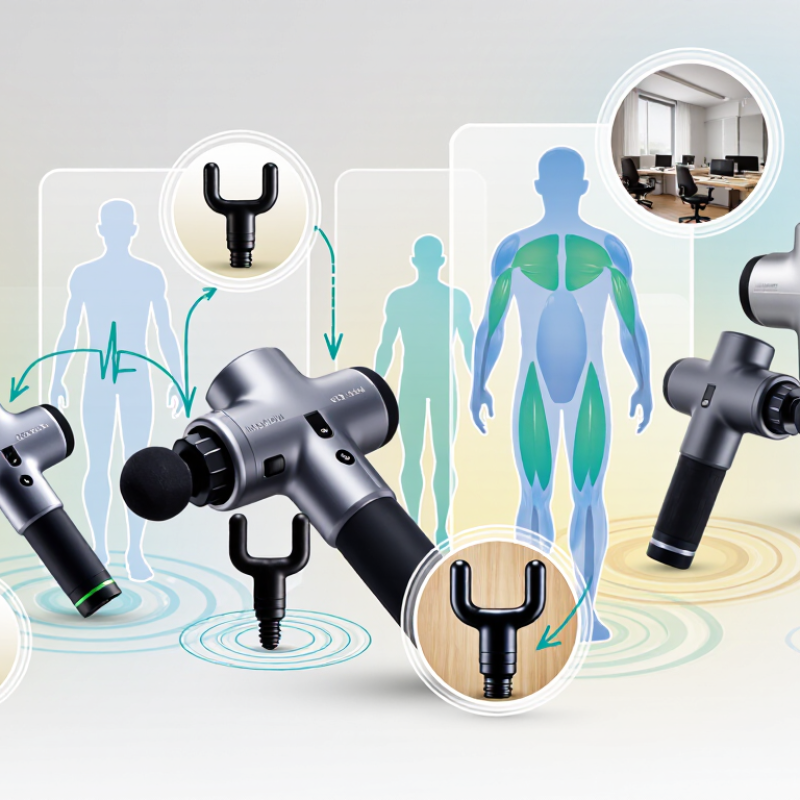
A Massage Pistol is a handheld device that delivers rapid, repeated pulses through a soft attachment head. Its motor moves the head against muscle tissue, creating a tapping sensation beneath the skin. Users commonly apply it to the calves, thighs, shoulders, or glutes after exercise. The pressure may temporarily increase local blood flow, reduce perceived tightness, and improve short-term range of motion. Think of a small motor pressing rhythmically into a tender calf, rather than a machine “breaking up” muscle knots.

That distinction matters. A 2023 review in the Journal of Clinical Medicine reported potential benefits from percussive therapy for flexibility and short-term muscle function, but it also noted limited research and inconsistent protocols. Evidence remains developing. Marketing language can sound more certain than science allows. A Massage Pistol is not a cure, and stronger pressure is not automatically better. Avoid bones, the front of the neck, open wounds, and areas with unexplained swelling or severe pain. People with vascular conditions, bleeding risks, or recent injuries should seek professional medical advice before use. This guide explains how the device works, what the research supports, and where caution is still necessary.
What Is a Massage Pistol and How Does It Work?

What Is a Massage Pistol?

A massage pistol is a handheld device that delivers rapid, repeated pulses into soft tissue. It usually contains a small motor, a moving shaft, and interchangeable foam or rubber attachments. When switched on, the attachment taps the skin and underlying muscles several times per second. This action is commonly called percussive therapy.

The sensation can resemble firm, rhythmic pressure from a therapist’s hands. A rounded head may suit large areas, such as the thighs or shoulders. A smaller head can target narrower muscle groups, but it may feel sharp if pressed too firmly. Many people use the device after exercise to reduce temporary stiffness or before movement to increase body awareness. It does not physically “break up” knots, despite that popular phrase.

A massage pistol works best with light pressure and slow movement across the muscle. Holding it on one spot for too long can cause soreness, bruising, or numbness. Avoid bones, joints, the front of the neck, open wounds, and areas with reduced sensation. People with circulation problems, recent injuries, or certain medical conditions should ask a qualified clinician first. Research supports possible short-term comfort and flexibility benefits, but the evidence is not a license to treat every pain. It is a useful tool, not a diagnosis. The difference matters.

How Does a Massage Pistol Work?

A massage pistol is a handheld device that delivers rapid, repeated pulses into soft tissue. Its internal motor moves an attachment back and forth, creating percussive pressure.

Think of a small, controlled tapping motion.

When the motor spins, an offset weight changes the device’s balance. This movement drives the attachment forward and backward several times per second. Pressure then travels through the skin and into superficial muscles. The effect may temporarily reduce stiffness, increase local warmth, and change how the nervous system senses discomfort. It does not physically “break up” scar tissue or remove lactic acid, despite common marketing claims.

How you use it matters.

Start with the lowest setting and a soft attachment. Move slowly across a large muscle, such as the thigh, for about thirty seconds. Avoid pressing hard or staying on one spot too long. The body should feel stimulated, not bruised. That sounds simple, but people often chase stronger sensations and overdo it. More intensity is not automatically better.

Research suggests percussive therapy may support short-term flexibility and post-exercise comfort, but results vary. It should not replace medical assessment, physical therapy, or proper recovery.

Avoid using it over broken skin, acute swelling, numb areas, bones, the front of the neck, or known blood clots. People with certain medical conditions should ask a qualified healthcare professional first.

The relief can feel convincing, yet it may only be temporary. That distinction deserves attention.

What Are the Main Parts of a Massage Pistol?

A massage pistol is a handheld device that delivers rapid, repeated taps into soft tissue. Its main parts determine how safely and effectively those taps feel. The outer shell provides grip, while the motor creates rotational force. A gearbox transfers that force to an eccentric cam or connecting rod. This changes rotation into the short, vertical movement felt at the massage head.

The massage head is usually made from firm foam, rubber, or plastic. Different shapes spread pressure differently across large muscles, narrow tendons, or sensitive areas. The shaft connects the head to the drive system and controls its travel distance. A longer stroke may feel deeper, but deeper is not always better. The control panel adjusts speed, and some models include pressure sensors or LED indicators. Battery cells power the motor, while a charging circuit manages energy flow and heat.

Grand View Research estimated the global massage gun market at about USD 0.55 billion in 2023, with continued growth expected through 2030. That expansion does not prove medical effectiveness. A 2023 systematic review in the Journal of Clinical Medicine found that percussive devices may improve short-term flexibility and reduce perceived soreness, but evidence remains limited. In practical use, I notice that a softer head feels more controllable after exercise. Still, users can press too hard without realizing it. The device is mechanical, not intelligent. Temperature, battery wear, and attachment fit can also change performance. Small parts matter.

What Is a Massage Pistol and How Does It Work?

A massage pistol is a handheld percussive therapy device that uses a motor and an eccentric rotating mechanism to move a massage head rapidly back and forth. This repeated motion applies short, rhythmic pulses to muscles and soft tissue.

Main Parts of a Massage Pistol

  • Motor: Converts electrical energy into rotational motion.
  • Eccentric mechanism: Changes the motor’s rotation into the reciprocating movement of the massage head.
  • Massage head: Transfers the percussive force to the body; different shapes are designed for different tissue areas.
  • Battery: Supplies portable power, commonly through a rechargeable lithium-ion pack.
  • Control interface: Allows the user to select speed levels and monitor operation.
  • Housing and handle: Protect the internal components and provide a secure grip.

The chart shows representative percussion-speed settings commonly used in consumer massage pistols. Actual speeds vary by model, load, battery level, and selected intensity. Higher speeds create more frequent impacts, while lower speeds are generally easier to control on sensitive or smaller muscle areas.

What Are the Benefits and Common Uses?

A massage pistol is a handheld device that delivers repeated, targeted pulses to soft tissue. Its motor moves a rounded attachment rapidly against the body. This action may increase local blood flow and create a temporary feeling of looseness. The pressure should feel firm, not painful. More force does not always produce better results.

People commonly use massage pistols after exercise, especially on the calves, thighs, glutes, and upper back. A slow pass can help reduce the sensation of tight muscles after running or strength training. Some users also use it before activity to wake up stiff areas. Keep the device moving for about 30 seconds per muscle group. Avoid bones, joints, the front of the neck, open wounds, and visibly swollen areas. Never treat sharp pain as ordinary muscle tension.

The benefits are practical but limited. Percussion may improve short-term flexibility and comfort, yet it cannot repair a tear or replace medical treatment. It is easy to overuse the device while chasing a stronger sensation. That approach can leave tissue tender the next day. Start with a low setting and reassess how your body responds. People with circulation problems, bleeding disorders, nerve loss, or recent surgery should seek professional advice first. Even healthy users may misjudge soreness after intense training. A qualified physiotherapist can help identify whether the tightness comes from muscle fatigue, joint irritation, or another cause.

What Is a Massage Pistol and How Does It Work? - What Are the Benefits and Common Uses?
Topic How It Works or What It Means Typical Information Common Use or Practical Note
Definition A massage pistol is a handheld percussive therapy device that repeatedly presses a soft attachment against the body. Also commonly called a percussion massager. It is intended for temporary muscle comfort and mobility support, not for diagnosing or treating medical conditions.
Basic mechanism An electric motor moves an attachment rapidly back and forth, producing repeated short-pressure pulses in the soft tissue. The sensation is mechanical pressure rather than vibration alone. Pressure should remain comfortable and controlled; the device should glide rather than be forced into one spot.
Attachment travel Travel distance describes how far the attachment moves during each stroke. Many consumer devices offer approximately 10–16 mm of travel, although specifications vary. Shorter travel may feel gentler; longer travel can feel more pronounced and requires lighter pressure.
Speed settings Speed controls how frequently the attachment delivers percussive strokes. Common consumer ranges are roughly 1,200–3,200 strokes per minute, depending on the device. Use a low setting for sensitive areas and a moderate setting for large muscle groups.
Short-term mobility Pressure and movement may temporarily reduce the feeling of stiffness and improve joint range of motion. Research generally supports short-term improvements in flexibility or range of motion in some situations. It can be used before activity as part of a broader warm-up, but it does not replace active movement.
Post-exercise soreness Percussive pressure may alter pain perception and help muscles feel less tight after exercise. Potential relief is usually temporary, and evidence for reducing delayed-onset muscle soreness is still limited. Use gentle pressure for a few minutes rather than aggressively treating sore tissue.
Circulation sensation Repeated pressure can create a temporary warming or increased-blood-flow sensation in the treated area. The effect is local and temporary; it should not be considered a treatment for circulation disorders. Stop if the area becomes numb, unusually painful, swollen, or discolored.
Common target areas The device is generally used on broad, fleshy muscle groups. Common areas include the quadriceps, hamstrings, gluteal muscles, calves, upper back, and shoulders. Move slowly over the muscle and avoid direct pressure on bones and joints.
Areas to avoid Certain tissues are more vulnerable to pressure or mechanical impact. Avoid the front and sides of the neck, head, spine, kidneys, open wounds, bruises, varicose veins, and recently injured areas. Do not use over numb skin or areas with unexplained pain.
Typical session A session usually consists of light, continuous passes over selected muscles. About 30 seconds to 2 minutes per muscle group is a practical general guideline. Longer or harder sessions do not necessarily provide greater benefit and may increase irritation.
Safety considerations Excessive pressure or use on unsuitable tissue can cause pain, bruising, swelling, or nerve irritation. People with blood-clotting disorders, circulation problems, reduced sensation, pregnancy-related concerns, or significant injuries should seek medical advice first. Discontinue use and seek professional guidance if symptoms worsen or persist.
Overall evidence Massage pistols may provide short-term comfort, perceived relaxation, and temporary mobility benefits. Evidence is more supportive for short-term effects than for long-term treatment or injury prevention. Use it as a supplementary recovery tool alongside sleep, hydration, gradual exercise, and professional care when needed.

How Can You Use a Massage Pistol Safely?

A massage pistol uses rapid, repeated pulses to press into soft tissue. This may temporarily increase blood flow, reduce muscle stiffness, and improve joint movement.

A 2023 systematic review in the International Journal of Sports Physical Therapy found short-term flexibility improvements in several studies. Evidence for faster recovery remains inconsistent.

Use it gently.

Begin on the lowest setting for 30 seconds. Move slowly across the muscle, rather than pressing one spot aggressively.

Avoid bones, joints, the spine, the front of the neck, and areas with bruising, swelling, or broken skin.

Never chase sharp pain.

That detail matters.

A 2020 controlled study published in the Journal of Sports Science and Medicine reported improved ankle movement after brief calf treatment, without an immediate strength loss. However, the study involved a small sample and measured short-term effects. It does not prove that longer sessions are better.

Do not use a massage pistol over numb skin, varicose veins, or a suspected injury. People taking blood-thinning medicine, recovering from surgery, or managing circulation problems should ask a qualified clinician first.

Stop immediately if you notice tingling, unusual pain, dizziness, or skin discoloration.

I would also avoid using it directly after a serious injury, even when the area feels tight. Tightness can be misleading. A licensed physiotherapist can help identify whether the problem is muscle tension, joint irritation, or something requiring medical assessment.

FAQS

How does a massage pistol work?

A small motor moves the massage head back and forth rapidly. This creates repeated tapping pressure in soft tissue. Think controlled tapping, not deep cutting. The effect may temporarily reduce stiffness and change discomfort signals.

What are the main parts of a massage pistol?

Common parts include a motor, battery, control panel, shaft, gearbox, and massage head. An offset weight changes rotation into a vertical movement. The attachment spreads pressure across the body. Small parts matter.

Can it remove lactic acid or break up scar tissue?

No reliable evidence supports those common claims. The device does not physically remove lactic acid or break scar tissue. It may improve temporary comfort and flexibility. That distinction matters.

How should a beginner use it?

Start with the lowest speed and a soft attachment. Move across a large muscle for about thirty seconds. A thigh is an easy area to begin. Keep the device moving slowly. Do not chase strong sensations.

Where should you avoid using it?

Avoid bones, joints, the spine, and the front of the neck. Do not use it over broken skin, bruises, swelling, or numb areas. Avoid suspected injuries and visible circulation problems. Never treat a blood clot area.

What warning signs mean you should stop?

Stop if you notice sharp pain, tingling, dizziness, or unusual skin discoloration. Increased soreness is also a warning. The body should feel stimulated, not bruised. I might underestimate pressure at first.

Can people with medical conditions use it?

Some people should ask a qualified healthcare professional first. This includes people recovering from surgery or taking blood-thinning medicine. Circulation problems also require caution. A tight muscle may hide another issue.

Does stronger pressure produce better results?

Not necessarily. Hard pressure can irritate tissue and create soreness. A longer session is not automatically better. Short-term relief can feel convincing, but it may not last. That deserves careful reflection.

Can it replace medical care or physical therapy?

No. It may support short-term flexibility or post-exercise comfort. Evidence for faster recovery remains inconsistent. Persistent pain, swelling, weakness, or numbness needs professional assessment. Convenience is not diagnosis.

Conclusion

A Massage Pistol is a handheld percussion device designed to deliver rapid, repeated pulses to the body’s soft tissues. It typically includes a motor, rechargeable battery, control buttons, speed settings, and interchangeable massage heads made for different muscle areas. When activated, the motor moves the head back and forth, creating rhythmic pressure that may help relax tight muscles, improve temporary blood circulation, reduce feelings of stiffness, and support recovery after exercise. It can be used before activity to gently prepare muscles or afterward to promote relaxation and comfort.

For safe use, begin with the lowest speed and apply light pressure while moving the device slowly across large muscle groups. Limit time on each area and stop immediately if you feel sharp pain, numbness, unusual swelling, or significant discomfort. Avoid using it directly on bones, joints, open wounds, irritated skin, or areas with suspected injury. People with certain medical conditions, circulation concerns, or recent surgery should seek professional medical advice before using a Massage Pistol.

Sophia

Sophia

Sophia is a dedicated marketing professional with an exceptional depth of knowledge about her company's products and services. With a keen understanding of market trends and customer needs, she crafts insightful blog posts that not only inform but also engage readers, enriching the company’s online......